Categories
Editorial Opinion

Editorial: Hazing

The University’s chapter of Sigma Alpha Epsilon fraternity (SAE) has been accused of hazing and illegal alcohol and drug use. The University, which claims to have accumulated substantial evidence against SAE, is threatening the chapter with either suspension from the University or criminal charges. We support the University’s “zero tolerance” anti-hazing policy and hope that, if the allegations against SAE are true, the University acts harshly and justly in response.

Considering the huge number of policies the Greek office creates but doesn’t effectively enforce (for example, the “no unregistered parties” rule, the “no mixers” rule, and the wristband rule for registered parties, among many others), we are happy to see the administration taking action on this problem. We are especially happy to see the problem being addressed before someone has gotten badly hurt.

We suspect that hazing is much more rampant at this University than administrators formally acknowledge. As is evident from the widespread binge drinking that takes place approximately three times a week, many students have a habit of being reckless, apparently assuming that nothing bad will happen to them. At least some students seem to apply this dangerous attitude to the concept of hazing as well.

The student body has no excuse not to know what hazing is, especially considering all of the educational programs that members of the Greek system are forced to attend. However, peer pressure reinforces whatever systems are already in place. Even students uncomfortable with what is going on find themselves in a lose-lose situation: if they speak up in objection, they risk alienating themselves and being ostracized from their desired group of friends. Although we may question why a student would want to be friends with a group insistent on hazing, having to find an entirely new group of friends is a formidable task that is much easier said than done. It is unsurprising, then, that students might prefer to endure hazing than risk this other option.

For this reason, change realistically must come from the group level rather than the individual level. Organizations that haze, including non-Greek students as well, must rethink their procedures and reevaluate their priorities. Students must reaffirm a commitment to actually caring about the people they are ostensibly initiating as friends. Such a commitment is completely incompatible with hazing.

We applaud the Greek office and University administration for taking action, because students need a wake-up call. Hopefully this can be that wake-up call; hopefully we won’t need to see a body.

Categories
Featured News

SAE suspended four years for hazing

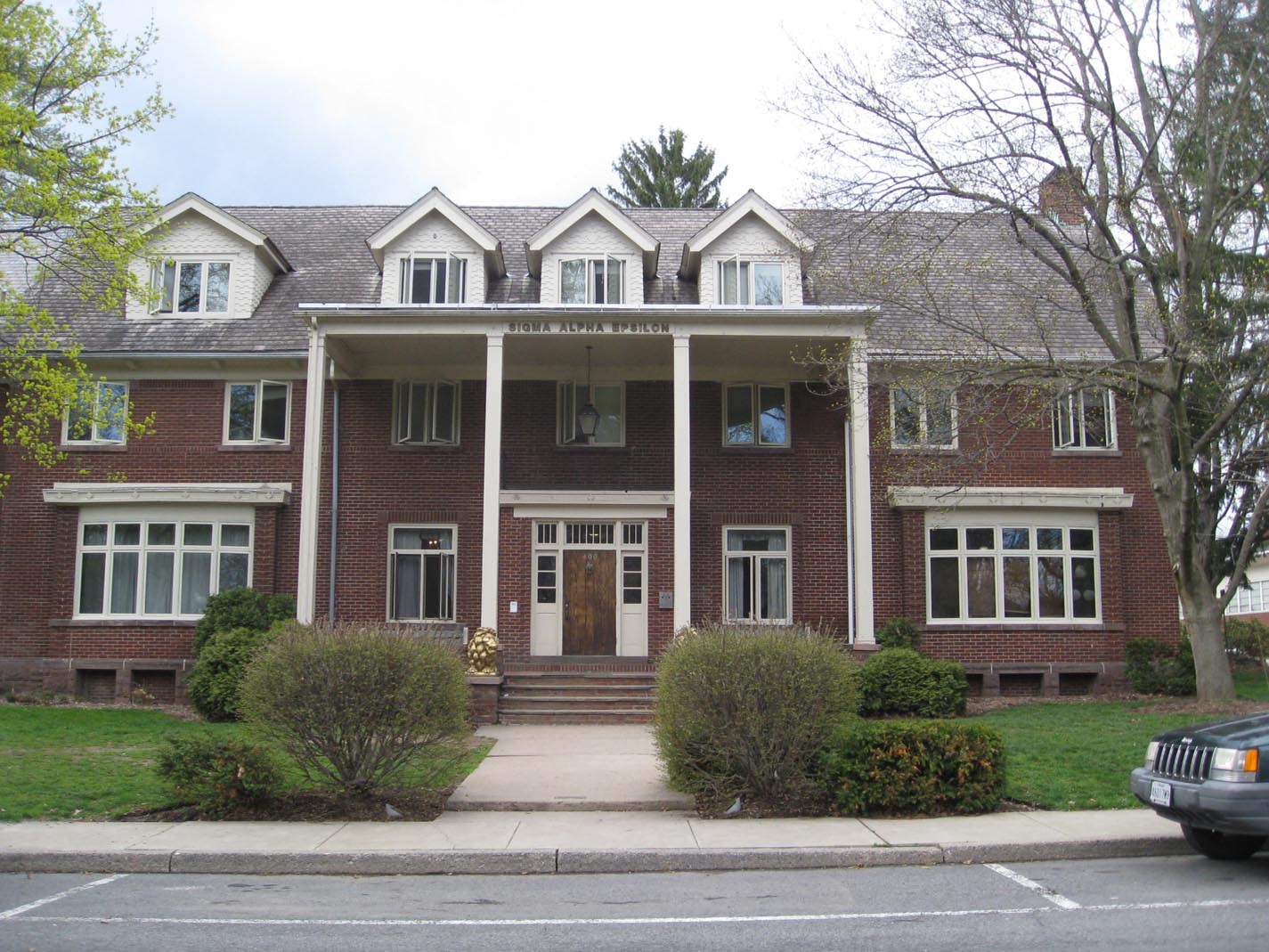
Sigma Alpha Epsilon, whose house is located on St. George Street, has agreed to a four-year suspension following a hazing investigation. Update: On May 13, Susan Lantz, Dean of Students, sent an email to campus announcing that Sigma Alpha Epsilon (SAE) had been suspended from campus for four years (as opposed to the initially-reported five) for “hazing and other violations.”

According to Lantz, the investigation against SAE had been on-going since “late last fall,” when a father submitted an anonymous letter to the University.

“The consequent investigation . . . revealed a pattern of continuing and hazardous conditions inimical to the principles of the University, violations of the Code of Conduct that all student organizations agree to follow as members of the campus community, and behavior unbefitting the standards of our Greek-letter community,” Lantz said in the email.

SAE will not be allowed to hold any fraternity functions during the four-year suspension period. Pending good behavior, it will become eligible for re-colonization in Fall 2015.

The original article printed in the April 29 edition of The Bucknellian appears below:

SAE facing hazing allegations

By Rob Duffy

Editor-in-Chief

The University’s chapter of Sigma Alpha Epsilon fraternity (SAE) is facing either suspension from the University or criminal charges for alleged hazing and illegal alcohol and drug use.

Tom Evelyn, the University’s senior director of news and media relations, confirmed to The Bucknellian that the University “has reason to believe that [SAE] and its members have violated University policy and local and state laws.”

On April 12, the University notified SAE, its local alumni organization and its national fraternity office that the fraternity has two options moving forward. If all three organizations agree, the University will suspend SAE from campus for five years effective July 1. Following this course of action, the chapter would be allowed to re-colonize in 2016 at either its current location or in a newly constructed location on South Campus.

If the three organizations do not agree to the suspension, the University has informed SAE that it will initiate criminal and student conduct charges against the fraternity and its members, which could possibly, according to Evelyn, result in “permanent expulsion of the fraternity.”

SAE has been given a deadline of May 1 to make this decision.

The University has already notified the District Attorney of its investigation and its evidence against SAE.

Evelyn was the only person who would speak to The Bucknellian about the investigation. Kevin Foster, Assistant Director of Residential Education for Fraternity Affairs, did not respond to multiple requests for comment. SAE president William D’Agostino ’12 and several other members of the fraternity declined comment. Interfraternity Council president Michael Higgins ’12 also declined comment. Kristi Conklin ’12, representative on the Council on Greek Life deferred comment to Evelyn and Pete Mackey, University Vice President for Communications, who was not able to be reached for comment.

No additional details were available about the nature of SAE’s alleged violations or the University’s evidence regarding the infractions.

According to the Univeristy’s Plan for Prominence, the University has a “zero tolerance” policy regarding hazing.

Hazing is a criminal offense in Pennsylvania. A third-degree misdemeanor, it is punishable by up to a year of imprisonment. Additional charges and penalties may be applied for additional laws broken during the act of hazing—for example, alcohol or drug laws.

“Our Greek-letter organizations are an important component of the University experience, and we are committed to ensuring that all students who participate in our fraternities or sororities enjoy and benefit from the experience,” Evelyn said.

Categories
Letters to the Editor Opinion

Letter to the Editor: Fraternities recognize recycling inefficiency, vow to improve

To the editor:

On behalf of the Interfraternitiy Council and 12 fraternity presidents on campus, we would like to formally recognize our current deficiencies in our recycling practices on campus as organizations. We firmly stand in improving our attitude and behavior towards proper waste mitigation and separation to prevent further recyclable material from reaching the Lycoming landfill. As the current semester comes to a close, we formally agree to make a diligent and unwavering effort to encourage our brothers to reuse and recycle whenever possible, and to reduce our waste and energy use. In the coming months we plan to incorporate recycling into our policies and include checks by the Greek Monitoring Team during registered events to ensure proper measures are being taken to recycle.

We also agree to be wary and mindful of all unwanted furniture, clothing and school supplies that we and our brothers may choose to leave behind, and vow to donate them to appropriate sources, such as Hidden Treasures. We would like to acknowledge each of our chapters’ renewed interest in these efforts and are thoroughly motivated by our phenomenal potential to make an impact on the lives of others in need. It is our greatest hope and desire that our fellow colleagues and professors will support us in our efforts as we continue to support and encourage one another.

Sincerely,

Brad Meyer ’13, Interfraternity Council GAMMA Chair and the Executive Board

and

Jim Wilcox ’12, Chi Phi

Charlie Frederich ’12, Delta Upsilon

Nick McLeod ’11, Kappa Alpha Psi Fraternity, Inc.

Michael Howard-Johnson ’12, Kappa Sigma

Justin Jones ’12, Lambda Chi Alpha

Matt Harbin ’12, Phi Gamma Delta

Matt Herman ’12, Phi Kappa Psi

Will D’Agostino ’12, Sigma Alpha Epsilon

Rob McFeeters ’12, Sigma Chi

Brandon Bays ’12, Sigma Phi Epsilon

David Pieper ’12, Tau Kappa Epsilon

Categories
Arts & Life

The Guy Behind the Camera: Getting to Know Edward Louie ’13

By Laura Crowley

Arts & Life Editor

If you attend this University, it is likely that Edward Louie ’13 has taken a photograph of you.   Louie, from Portland, Ore. makes an appearance at nearly every major event on campus, but also documents students’ everyday lives.  In an interview with Louie, The Bucknellian discovered more about the man behind the camera.

Q: How did you become interested in photography?

A: I started photography in fifth grade because I wanted to show others what I wanted to tell them about, in addition to telling them about it. At the time I felt as though my words were doing an insufficient job at describing what I wanted to tell, and taking pictures was an excellent solution to the problem.  An interesting fact: back when I was in fifth grade (2001-ish) digital cameras took 3.5″ floppy disks. ‘What’s a floppy disk,’ you say?

Q: Do you hope to pursue photography as a career after graduation?

There [have been] times when I have considered making photography my profession. The reason why I didn’t do it is because I am too scared I will end up being a starving artist. I am very uncomfortable with the idea of having to pay the utilities, the mortgage and let’s not forget the college debt, purely from doing photography. It is a fact that being a professional photographer is among the lowest paying professions. A number of professional photographers have said: ‘The worst reason to become a professional photographer is because you love to take pictures. The stresses you will encounter being a professional will beat your passion to the ground. However, if you’re still keen on taking pictures after that, then you can be a professional photographer.’  As a result, I have no lasting desire to pursue photography as a full time career, and instead, I am pursuing civil engineering as a profession. I can sleep at night knowing that the odds are well in my favor that a career in civil engineering will land me a stable job.

Q: What do you most like to photograph?

A: I don’t have an affinity to any one particular genre of photography. Because I don’t specialize I believe the phrase ‘jack of all trades, master of none’ applies to me.

Q: Do you ever collaborate with other photographers at the University?

A: I have yet to collaborate with other photographers on campus. When I run into other photographers on campus I occasionally talk shop with them, but often times I am focused on the event/action/subject. I am open to helping, advising and mentoring fellow photographers. One issue is the lack of active photographers on campus.

Q: Do you ever get paid to photograph events?

A: I occasionally get paid to photograph events on campus. I am increasingly more firm about charging students and student organizations for event photography. The hourly pay on campus is nowhere near enough to compensate the amount of time and effort it takes to produce high quality images. As a result I try to charge students, clubs and organizations as a freelance photographer. It has consistently been a fact that for every hour of photography I do, there is two hours of post-production to follow. One needs to charge enough for the hour of photography to cover for the hours of post-production. In some cases, time must be spent for pre-production, like getting on scene early enough to have the time to scout out good angles and to have a word with the event manager.

Outside of Bucknell, the pay is much better, and clients are much more understanding of the cost of professional quality images, [since] I guess they’ve shopped around and know what everyone else charges. Inside Bucknell, there is a general expectation that things should be done for free or very close to that. However, I don’t have the time during the academic semester to take on too many requests outside of Bucknell. Students are generally broke, and I don’t blame them.

Q: What camera do you use?

A: “What camera do you use?” is a much more complicated question when it comes to an SLR since you’re not talking about a camera but rather a camera system. I guess you’re asking “what is in your camera system?” or “what’s in your bag?”

I use a Canon 40D the reason why I chose this body is because it was the least expensive body at the time (3 years ago) that had a pentaprism. Cheaper entry level bodies use a pentamirror rather than a pentaprism, pentamirrors produce a dim and tiny image through the viewfinder. To me looking through those are like looking trough a toilet paper roll, yuck!

The lenses I use consist of a 70-200mm f/2.8 IS, 10-22mm f/3.5-4.5 and a 50mm f/1.4. These 3 lenses allow me to handle pretty much every situation short of field sports like football, for that you need a giant super-telephoto lens. The 70-200mm lets me get close and isolate one or two subjects from the rest. The 10-22mm allows me to get everything in and then some and the 50mm allows me to photograph in ultra low light situations when I can’t or don’t want to use a flash.

For flash I use a 580EX II, it is an external flash that mounts into the hotshoe and allows me to bounce the flash off the ceiling and walls. The result is images that don’t look like flash was used at all. I have honestly never ever used the popup flash on my camera and I have taken over 75,000 images with that body. Popup flashes produce nasty looking images I don’t know what they even include them in cameras.

Q: What are your hobbies outside of photography?

A: My other hobbies besides photography include mountain biking, hiking, travel, target archery and the typical college student hobbies of eating, sleeping, being lazy, Facebooking, YouTubing and listening to music.

Q: Why did you choose the University?

A: I started my college search looking for an accredited, undergraduate-focused engineering program with small student-to-teacher ratios. I was surprised at how few there were. Of the ones I applied to, only University of Portland and Bucknell offered financial aid packages that would make it financially reasonable to attend. [By] looking further into Bucknell, I discovered that it was ranked as one of the top universities for undergraduate engineering. Coupling that with an interest to explore the east coast made Bucknell a pretty clear choice.
Categories
News

Rooke Science Center to be dedicated

By Olivia Seecof

Writer

In recognition of the Rooke family’s loyalty to the University, the Biology Building and the Robert L. Rooke Chemistry building will be renamed officially as the Robert L. Rooke Science Center.

The late Robert L. Rooke, class of 1913, and his family have a history of being very supportive of the University and its needs. Robert C. Rooke recently provided significant funding toward the Academic West project. This gift shows the continuation of the family’s commitment to bettering the University for future students. Their generosity and faithfulness has contributed to the outstanding academic programming and opportunities on campus.

“The designation of the Robert L. Rooke Science Center honors the continuing contributions of Robert L. Rooke and the entire Rooke family to the University. For decades, the Rookes have been true partners with Bucknell, helping us to provide the conditions for our students’ ongoing success. We are pleased to recognize their important role in the University with this new designation,” Provost Mick Smyer said.

“As a biology major and upcoming Bucknell graduate, I’m very glad to see continued support from alumni and their families,” Susan Bentley ’11 said.

Many students at the University, studying science or not, are appreciative of any gift to the University. “The only science classes that I plan to take are to fulfill my requirements, but I think it is awesome that the Rooke family is so supportive of enriching Bucknell academics,” Samantha Lara ’13 said.

“As a biochem major, I spend a lot of time in the science buildings,” Kristina Mammano ’14 said. “I am very grateful for the support given by the Rooke family and I look forward to spending even more time learning in the Rooke Science Center.”

There will be a ribbon-cutting and dedication ceremony for the renamed Science Center tomorrow at 11:15 a.m. in the Candland Garden, located between the Rooke Science Center, the O’Leary Center and the F.W. Olin Science Building to celebrate this special occasion. In the event of rain, the ceremony will take place inside the building. All students, faculty and staff are encouraged to join members of the Rooke family and the Board of Trustees at the ceremony.

Categories
News

Forum revokes Mortenson’s invitation

By Katherine Schotz

Writer

The University will no longer be bringing Greg Mortenson to campus as a part of the Bucknell Forum’s “Creativity: Beyond the Box” series next fall, and his book, “Three Cups of Tea,” will no longer be the selection for the first-year common reading experience, administrators announced this week. Mortenson’s inability to answer satisfactorily to questions concerning allegations made against his book and his charity made the University doubt Mortenson’s credibility.

Instead, “This I Believe: The Personal Philosophies of Remarkable Men and Women,” eds. Jay Allison and Dan Gediman will be the reading selection for all first-year students. This book is a collection of essays from different women and men from different fields that reflect on their core beliefs.

Mortenson wrote the New York Times best-seller “Three Cups of Tea” about schools he started in Afghanistan and subsequently started his own charity to raise money for the schools. The author has recently been the center of controversy with allegations accusing him of falsifying the information in his book.

“We have been troubled by the recent media reports about the veracity of Mr. Mortenson’s bestselling ‘Three Cups of Tea,’ the credibility of his claims about his work for children of Afghanistan and Pakistan, and the possible illegalities associated with the financial management of his non-profit foundation, the Central Asia Institute,” according to a campus-wide email sent out by the Bucknell Forum Task Force.

The decision not to have Mortenson speak came about as a result of the on-going allegations that Mortenson was lying about his organization, specifically the funding and management of the Central Asia Institute. There was a report aired on “60 Minutes” that called into question the truth behind the book and the charity.

According to an article from CNN.com titled “Montana AG says he is looking into ‘Three Cups of Tea’ charity,” there are clear financial issues. The money raised by Mortenson through his charity was supposed to help build schools for girls in Afghanistan. “However, in 2009, less than half of that money actually went to building schools in Afghanistan and Pakistan. Instead, $1.7 million went to promote Mortenson’s books, according to the institute’s board of directors.”

The controversy caused University officials to reevaluate if he was the best choice of speaker, and now they have decided not have Mortenson speak next fall as planned.

“I think he should be here because of the broader experience of what he did,” John Shaheed ’11 said. “If the book had to be transferred to the fiction section then he shouldn’t come, but because the experiences in the book are in general are true [he should still come].”

The Bucknell Forum Task Force, which made the decision, is composed of Professors Carmen Gillespie, Beth Capaldi Evans, Paula Davis, Joe Tranquillo, Margot Vigeant and Zhiqun Zhu; Michael Davis ’13 and Lindsay Machen ’11; and administrators Rob Springall, Kari Conrad and Pete Mackey, who is the chair.

“The allegations against him cut to the essence of his work–-whether he has done what he claims he has; whether his work has been as impactful as he says it is; and whether, rather than serving the people he champions, he may in some ways have used them for his own benefit,” according to the e-mail.

Mackey was reluctant to answer questions about the decision because he did not want to speak on behalf of the other members. He did comment that a completely separate and independent committee reached the decision for the first-year class not to read the book.

Categories
Opinion

Large donation creates variety of opportunities

By Pranav Sehgal

Opinions Editor

Recently, William Morrow ’70 and his wife Madeline have committed $6 million in support of the University. This contribution will provide funding to the Academic West and to “University strategic priorities,” President John Bravman said.

The funding will also give to programs such as scholarships, “academic facilities, the annual fund, study abroad and athletics.” According to the University website, the Morrows’ gift will go toward “adding 70,000 feet of classroom, labs, faculty offices,” and more.

With the University adding such great expanses to the campus, one asks the question of whether our university is changing from a small, liberal arts school to a large, research-based institute.

This then starts to make the current student and prospective student weigh the pros and cons to the expansion.

The benefits to such an action would include things like improved infrastructure, greater resources and additional students who may have unique perspectives. I believe that all these things stated are necessary for any institution to thrive in this environment. Universities must not only have state-of-the-art facilities and resources in order to attract the brightest students, but also a diversity of perspectives in order to enrich student life.

The cons to such actions may include a higher student-to-teacher ratio. I believe what makes the University great is that ratio between students and professors is, in most cases, very balanced which makes it easier for students to seek help and thrive in this environment.

Although there may or may not be an increase in the student-to-teacher ratio, I believe that this funding will greatly improve and contribute to the University. This funding will not only contribute to the student life of current students but will also help prospective students seek financial aid if needed. The University is changing before our eyes and the outcome seems promising.

Categories
Opinion

Documentation confirms Presidential birth in the U.S.

By Pranav Sehgal

Opinions Editor

Recently, the White House released an official version of President Obama’s birth certificate after Donald Trump, a prospective Republican Party Presidential candidate, had questioned whether or not President Obama was born in the United States.

Obama, sounding greatly annoyed and troubled by these claims, said at the White House, “We do not have time for this kind of silliness. We’ve got better stuff to do. I’ve got better stuff to do. We’ve got big problems to solve.”

Trump, speaking in New Hampshire, said that he was “really happy” that this had taken place and was “ready to debate on other issues.”

The document that the White House released proves that he indeed born in Hawaii on August 4, 1961. “The president believed the distraction over his birth certificate wasn’t good for the country. It may have been good politics and good TV, but it was bad for the American people,” an Obama spokesperson said. President Obama traveled to Hawaii specifically to pick up the birth certificate.

I believe that this whole argument about President Obama’s birth certificate is nonsense. Not only has he been President for the past two years but also a shorter version of his birth certificate had already been released earlier this year.

Still, many Americans remain skeptical about Obama’s birthplace. According to a USA Today/Gallup poll, “only 38 percent of Americans are positive that Obama was born in the U.S., while 15 percent think he was probably born elsewhere.”

This statistic is outrageous because not only does it show a complete disregard for our whole government, but has racial undertones.

Many believe that those who don’t think President Obama was born in the United States may be prejudiced.

Now that the official copy of President Obama’s birth certificate have been released, I hope this birther debate will stop because our country truly does have more pressing and important matters to be concerned with.

Categories
Arts & Life

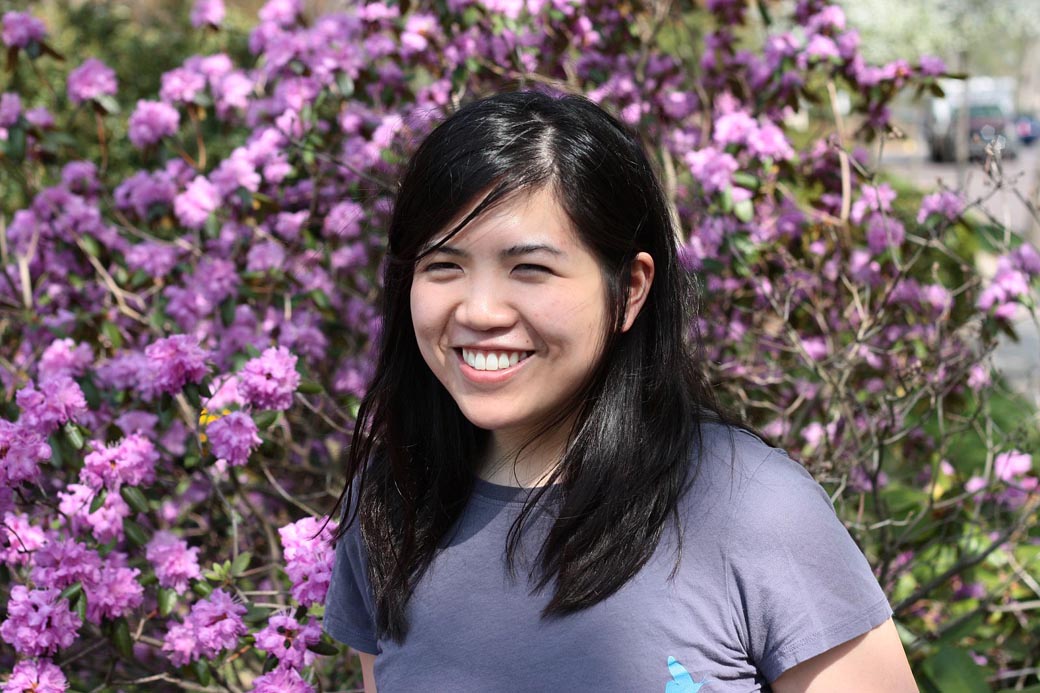
Reflections on the Past: Tracy Lum ’11

Tracy Lum '11 was Editor-in-Chief for the Fall 2010 run.

By Tracy Lum

Former Editor-in-Chief

If you know me, you probably know that I rarely sleep for more than seven hours a night, that I can’t survive a day without drinking at least one cup of coffee and that I have an insatiable (and slightly unexpected) thirst for gossip.

Strange habits aside, joining The Bucknellian on a whim four years ago was probably the best decision I made. To say I was a timid first-year is an understatement. I could barely hold a conversation with a stranger without having an anxiety attack.

My time at The Bucknellian changed that. Reporting gave me confidence; it made me take risks and stand up for causes. It made me explore the campus that initially daunted me. If it didn’t bring me out of my shell, it at least left a substantial crack in it.

I can’t say that I remember the first story I wrote for the paper. Having no previous experience with journalism, I clumsily gathered quotes and facts, piecing together an article that likely lacked focus and elegance. On Friday mornings, I’d pick up the latest issue, scan through my piece and gasp with outrage that the editors dared alter my writing. The following year I became one of those editors.

As the Arts & Entertainment content editor, I learned the basics of journalism. Naturally, I was nervous about joining the newspaper. For the past year, I was in awe of The Bucknellian, mostly because I was ignorant about how it was produced each week. I thought it was untouchable, unchangeable and incredibly demanding. I wasn’t wrong about the demanding part, but I did eventually figure out how to leave my mark on the paper.

After a semester of assigning stories and photos, writing one or two pieces a week and handling writers’ attitudes, I wanted to quit. Managing criticism and minor disasters each week became unbearable. But pride drew me into the paper. Seeing my name in print, knowing that what I wrote would become a part of the University’s history made me stay. I loved crafting narratives and bringing the stories of niche groups to the campus.

I loved it so much that I continued editing, later becoming features editor, associate editor of content and, much to my surprise, editor-in-chief. Pulling near-all-nighters (I’ve never actually gone a night without sleep) became commonplace. Developing a mild caffeine addiction didn’t faze me. Sometimes I’d walk home from Roberts basement at 3 or 4 a.m. after a night of production and hallucinate.

Last semester I organized my schedule so that I’d have my Tuesdays and Thursdays entirely free to field phone calls, answer ad questions, complete board edits, rewrite leads and catch the minute layout errors that would detract from the readers’ overall experience of the paper. The Bucknellian consumed every spare moment of my life. It even invaded my dreams, giving me nightmares about gaping holes in the layout, libelous statements or the nascent online version.

But no matter how much I suffered during the week, the final, freshly printed copy in my hands made up for it. My first week on the job, I reread every page probably 10 times before I sent the finished issue to the printer. That Thursday afternoon I collapsed once I reached my bed, and the same evening a friend burst through my door and handed me the first redesigned issue. It was sheer perfection, even in its imperfection.

After my term was over, I was elated. I probably screamed with joy and high-fived everyone I encountered. Wednesday nights were mine again. I could resume what I thought was my “real” life. As I looked over the last issue, I labored over every detail while sitting in the chief’s office, knowing that at some level I would miss the work. At times I do, and I don’t regret a single moment of my experience.

The Bucknellian has been so much a part of me and my life. It introduced me to some of the most brilliant, creative and hardworking people I will ever know. I will miss dearly my stalwart staff, especially Rob, Sarah and Kristen, who aided me throughout the summer while I planned the redesign and reorganization and who always kept the paper running. More thanks are due to my predecessors, especially Mike, who was a remarkable source of knowledge and advice. Courtney, you brought the news week after week, and you made production nights infinitely more entertaining. I can’t wait to see what you come up with next semester.

Jim, thanks for everything over the years. All that you have taught me I will never forget.

My friends, thank you for putting up with me, even when I conned you into working for the newspaper. John, without you, there would be no redesign. I am eternally grateful for our Thursday morning layout and venting sessions. Andy, thank you for publishing the online edition each week. I’ll miss WordPress filling my inbox with 30 emails.

To the writers and the new crop of staffers, I owe a successful run of the paper to you. I thought the art of print journalism was dying, but you resurrected it and exceeded my expectations in the process. Never again will I doubt the resilience of a college newspaper.

And Bucknellians, if you ever want to gossip over a cup of coffee, you know who to call.

Categories
Arts & Life

Reflections on the Past: Sarah Block ’11

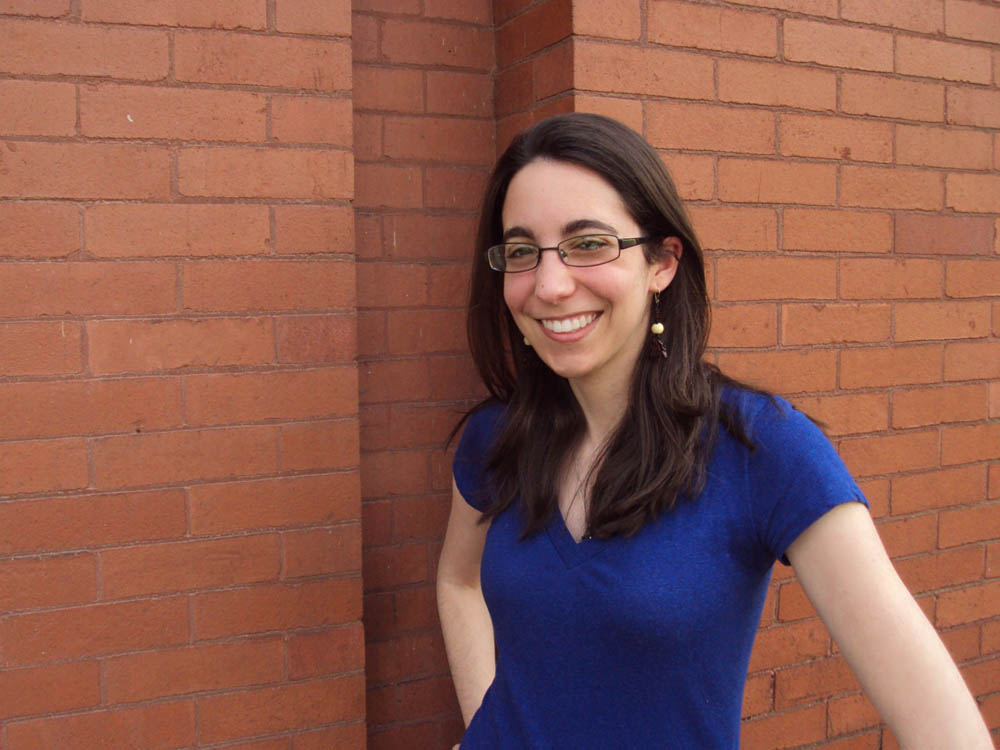
Sarah Block '11 was Associate Editor of Layout (fall 2010) and is currently the News Layout Editor.

By Sarah Block

Former Associate Editor of Layout

Author and journalist Sally Quinn once said, “I can’t imagine life without a newspaper.” Well, neither can I. Thinking back on the past few years, within a few short weeks of graduation, I could not imagine my undergraduate experience without The Bucknellian. One would think that constant sleep deprivation, stress over filling space on the front page and being confined to a windowless room in the basement of Roberts Hall at least one night a week for the past three years would have driven me insane and turned me off from news and journalism in any and all forms.

Instead, all of my experiences working for the newspaper, both good and bad, are what have made my participation in The Bucknellian worthwhile. In fact, my time as a layout editor and on the editorial staff has been a major part of my college experience, and I would not have had it any other way.

Initially, I thought joining The Bucknellian as a layout editor would be a great way to meet people and get involved in something else on campus, and I never imagined the extent to which I would become involved, if not attached, to the publication. While I undoubtedly get a wonderful feeling when I see my work on newsstands around campus and downtown every Friday, being a part of The Bucknellian has been so much more than just layout, design and public recognition.

As I head off to law school next fall, I know that my encounters with controversy, politics and the quest for neutrality while working for the paper will benefit me greatly in my future career. In fact, many of these experiences have further inspired me to study the law. More importantly, though, some of my best friends and many of the people I admire the most have been my fellow editorial staff members. Late nights in the newsroom having boy band sing-alongs, yelling at the uncooperative printer or eating the food acquired on a spontaneous Sheetz run are only some of my fondest memories from the past few years. Getting to know these people has been a highlight of my time at the University, and knowing them has helped me to develop into the person I am today.

The Bucknellian is a family, and being part of it is one of the things I will miss most about college. So, don’t be surprised when you come to visit me next year and find a room in my apartment wallpapered in pages of The Bucknellian. I’m not quite ready to leave it all behind just yet.