Categories
Opinion

Romney brings new needed policy changes to the table

Joe Selvaggio, Josh Cohen, and Pat Whales
Contributing Writers

On Nov. 6 the American people will make a decision that will affect the future of our generation and generations to come. We will either continue to mortgage our futures on Barack Obama’s promise of continued change, all of which has been overwhelmingly negative to date, or we can forge ahead on a new path, offered by challenger Mitt Romney, toward smaller government, more individual freedom and economic prosperity. The choice is ours, yet many Americans have been taken by Obama’s strategy of character assassination focused on defaming Romney in order to deflect attention from his own abysmal job performance. Romney was 100 percent correct when he said we Americans value our rights to fire incompetents who work for us and replace them with individuals better suited to the task at hand, and we hope that voters will replace the arrogant, contemptuous and incompetent occupant of the White House with a new president next week.

Of course, Obama’s reluctance to run on his record comes as no surprise. That record of failure includes a pork-laden stimulus plan that promised economic expansion but resulted only in adding $1 trillion to our national debt (which bloated by 60 percent to $16 trillion by the 3 and 1/2 year point in his administration) and advancing the cause of crony capitalism. Unemployment has been significantly higher than the levels Obama promised us in the white paper by Christina Romer supporting his “American Recovery and Reinvestment Act of 2009” and remains 2.2 percentage points higher than where we were told it would be today (7.8 percent vs 5.6 percent). In February 2009, Obama promised that he would be “held accountable” for his actions and that if he did not fix the economy, he would be “looking at a one-term proposition.” Given this, we wonder why he is running for reelection.

Obama has also attempted to associate his Obamacare with Romney’s healthcare plan in Massachusetts. In the second debate, Obama correctly stated that Romney’s plan “hasn’t destroyed jobs” and “is bringing down costs.” However, healthcare at the state and federal level simply cannot be compared. At the state level, socialized healthcare appropriates money far more efficiently by allowing an individual state to care for its constituents based on their specific needs, which, in general, are far more detailed than the needs of the entire country. Managing information flow to and from Boston about the state of the Massachusetts healthcare market is far less costly than centralizing and acting upon such information for the United States as a whole. Obamacare will cost an estimated $2,500 more than current traditional plans despite Obama’s claims to actually reduce costs by $2,500 (a $5,000 spread). Cost estimates by the “nonpartisan” Congressional Budget Office have skyrocketed from $939 billion at the time of the bill’s passage to over $2 trillion by the time the Supreme Court ruled that Obamacare’s individual mandate is indeed a tax.

We will not touch upon the Benghazi cover-up scandal, the Obama apology tour, Solyndra, Obama’s trampling on the rights of religious believers nor the obvious corruption of his Justice Department in its handling of the Black Panther voter intimidation case in Philadelphia, not to mention the other scandals.

Although desperate leftists in Chicago and elsewhere are over the prospect of losing the presidency, it serves as a poor excuse to fire false ad hominem attacks at Romney and to the American people. These left-wing partisans have accused Romney at various times of causing the cancer of an employee’s wife, being a felon and belonging to a cult. This campaign has been one of the dirtiest ever with the incumbent devoting 85 percent of his ads toward debasing his challenger. This is not the American way. We believe in a country where the issues take center stage and republicans, democrats and independents move us forward through compromise. Therefore we reject Obama’s politics of personal destruction.

Romney worked with Democrats and Republicans alike as governor of Massachusetts and we are confident that he will continue to be a bridge builder as our 45th president.
Categories
News

Sandy leaves little impact on campus


Courtesy of Wikimedia Commons
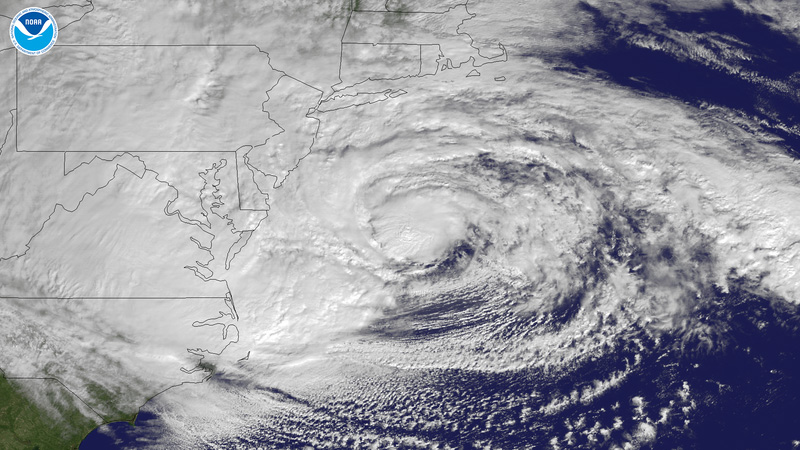
Satellite view of east coast on Oct. 29.

Sara Blair Matthews
News Editor

Hurricane Sandy hit the Lewisburg area from, causing the University to cancel classes and shut down campus offices starting at 2 p.m. on Oct. 29. Classes resumed and offices reopened at noon on Oct. 30. Dining services closed from 8 p.m. on Oct. 29 to 8 a.m. on Oct. 30. The Elaine Langone Center and Switchboard remained open. Parking restrictions resumed at 6 a.m. on the morning of Oct. 31.

Courtesy of Bucknell Office of Communications/ Jonathan McBride
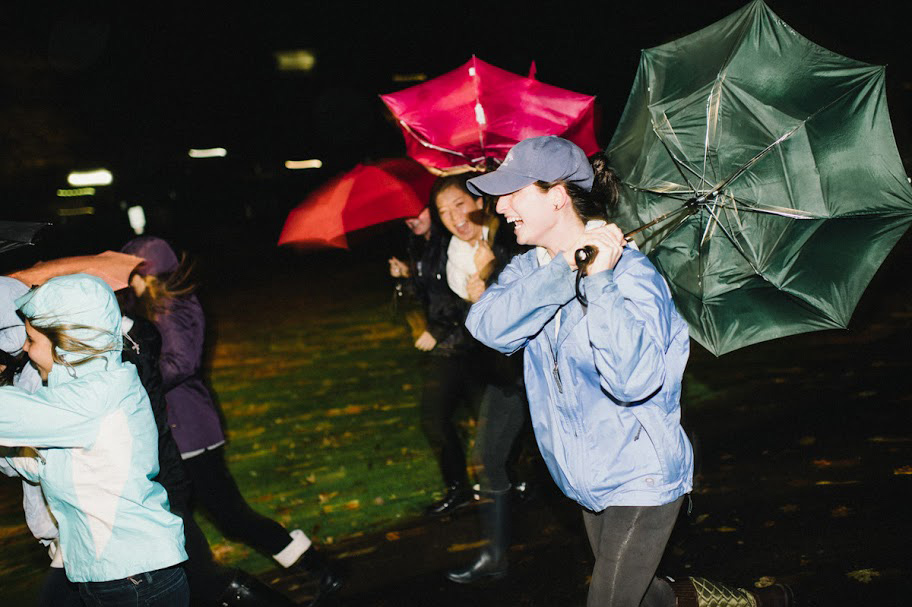
Students faced difficulty in traveling around campus due to the heavy rain and winds. Umbrellas were blown inside out.

Students were advised to avoid the Route 15 tunnel and the St. George Street tunnel in the case of flooding.

“With high wind gusts, please watch for flying debris, including trees and limbs,” the Campus Center said.

The Grove on lower campus was closed as a precaution due to high winds and falling debris.

“We appreciate your taking every step to keep yourself and others safe … and informed on this storm and its impact on campus,” President John Bravman said.

The University also made use of social media outlets, such as Twitter and Facebook to provide emergency updates. These pages can be accessed at https://www.facebook.com/BucknellU and https://twitter.com/BucknellU.

On Oct. 31, Bravman sent out a campus wide email entitled “Help Those Hurt by Hurricane Sandy,” in which he urged alumni, parents, faculty, staff and students to support students in urgent need at this time.

“We Bucknellians are especially pained by this [storm] because we know that many alumni, parents and students of our University community call the corridor that has suffered the greatest their home,” he said. “We encourage all Bucknellians to do what they can to support the Red Cross and other aid agencies providing help … thank you for anything and everything you can do to support urgent relief efforts that help … all who are struggling through the hardships this storm has caused.”


Categories
News

“Beyond the Bubble” event creates student entrepreneurs

Jen Lassen
News Editor

Although it often seems like we’re stuck in “the Bubble,” University staff and students are finding ways to break out.

On Nov. 5 in Charles A. Dana Engineering from 6 to 9 p.m., over 25 teams of student entrepreneurs will be pitching their business ideas in the University’s first “Beyond the Bubble” competition.

With students from all class years and a variety of majors involved, they will pitch their ideas, and from there the final six teams will present to a panel of alumni judges on campus on Nov. 12. The first place team will win a prize of $1,500 to help finance their business idea as well as one year free shared desk space in the Entrepreneur Incubator located downtown in the Dewitt Building.

“Bucknell’s inaugural ‘Beyond the Bubble’ Business Pitch Competition adds a new feature to a rich ecosystem of entrepreneurial opportunities and programs for students,” said Steven Stumbris, director of the University’s Small Business Development Center.

Along with this new event comes a new class, MIDE 375: “Should We Start this Company?,” that was developed and instructed by Associate Professor of Chemical Engineering Erin Jablonski.

“Several teams come from this class centered in entrepreneurship. In the class, students generate new business ideas, and product or service design and development through business planning,” Stumbris said.

There is evident and documented student interest in entrepreneurial success. For discovering this interest at the University, research was conducted based on the 2011 Higher Education Research Institute (HERI) survey of incoming first-year college students.

“In response to the question ‘How important is becoming successful in a business of my own?,’ the percentage of Bucknell students responding ‘essential’ or ‘very important’ was 35 percent,” Stumbris said.

This competition also builds upon the high interest from last spring’s Venture Plan Competition, which involved 31 University students on nine teams.

“A team of current students, ‘SoloSticks,’ was the second place winner, and they continue to develop their product for a roll out to campus this academic year,” Stumbris said.

Discover more at https://www.facebook.com/chewingforacure.

“At the ‘Beyond the Bubble’ competition, I am excited to meet more passionate young entrepreneurs like me. I strongly believe that my pitch, BuckSell.com, will change Bucknellians’ lives and make the University a better and more environmental friendly place,” Thomas Zhu ’14 said.

“The diversity of ideas is amazing. Students will pitch ventures ranging from a Bucknell-themed mini-golf course to language learning software, and from a chemistry-inspired microbrewery to a clothing line inspired by one student’s Nigerian heritage,” Stumbris said.

Categories
News

WVBU to cover breaking election news


Matt Szucs | The Bucknellian
Radio station members will host an election night event, featuring party coverage, debates, entertainment and video. The station will be broadcasting the event live on WVBU 90.5 FM.

Amanda Ayers
Managing Editor

The University’s radio station, WVBU, will be hosting an Election Night event in the Bison on Nov. 6, which will feature a mix of live debates, discussion, entertainment and video elements. The festivities will begin at 7 p.m. and last until approximately 11 p.m., depending on the results of the election. The event will be simulcast via 90.5 FM and WVBU’s web stream at www.wvbu.com.

“The idea was to host an event that is unique and informative both in person and on the radio,” WVBU Station Manager Alex Alam ’13 said. “We’re really excited about the combination of video and live discussion, but as a radio station, we wanted to also focus on the experience for those listening but not in the room.”

The debate aspect will take place on a stage in the Bison and will feature three debates between students affiliated with every major political club at the University. There will be live interviews with faculty and professors from various backgrounds and political orientations, as well as prerecorded interviews from those who cannot attend the event but still wanted to contribute. Finally, live results will be shared as they come in, assisted by commentary written by students in a journalism writing class.

“Our hope is that the debates will foster interesting and relevant conversations about the political landscape. Our ultimate goal is really to start a conversation that lasts beyond just the night of Nov. 6. The implications of this election will probably affect Bucknell students more than many realize right now,” WVBU Co-Music Director Charlie Geitz ’15 said.

The event is designed to have a structured format, but could nevertheless have unpredictable moments. For example, the moderators will use questions prewritten by WVBU, but the debate will also be shaped by the students who attend as well as by what is said in the debates.

Alam and Geitz want this to be an opportunity and outlet for students to voice opinions that they may otherwise have been hesitant to share. They are strongly encouraging and hoping for audience participation. They want to facilitate serious conversation and interaction between students around campus and encourage anyone interested in getting involved in any way to email Geitz at cmg020 or to either of them during the event on Election Night.

“A lot of traditional media coverage not only is from one political viewpoint, but is also very one-sided, since people just watch instead of speaking as well. So we wanted to create a new type of political event, one that can be a real conversation without feeling forced or simply self-affirming,” Alam said.

“I have been encouraged to see that many Bucknell students have been engaged in this year’s campaign, and I think it’s great that WVBU is going to provide a campus venue for information about the national election results as they unfold next week,” said Scott Meinke, Associate Professor of Political Science.

Categories
News

Isaacson discusses thinking outside the box

Sara Blair Matthews
News Writer

Walter Isaacson commented on innovative historical figures, the importance of education and the future of technology in his conversation with Jim Cramer on Oct. 27 in the Weis Center for the Performing Arts. The event took place at 9 a.m. and was featured in the University’s Homecoming Weekend activity lineup. The majority of the conversation focused on Isaacson’s new biography “Steve Jobs.”

“Bucknell connects the liberal arts with technology. People who understand both have the key to success,” Isaacson said.

Isaacson touched heavily on how Steve Jobs viewed the world as well as how he has shaped his company. In regards to the upcoming election, Jobs said he was fed up with the Democratic party and its disregard for businesses. Jobs believed that businesses are the backbone for creating jobs, and he thought that the government’s unnecessary regulations make it difficult to conduct business.

“If you have a real passion for your products, it triumphs a passion for profit,” Isaacson said about Jobs.

With Apple, every four to five years Jobs tried to do something out of the box. He also decided to focus on four products to ensure they were beautifully crafted and correctly executed. Jobs saw himself as an artist and insisted on maintaining the integrity of his products, even when it meant a lost profit.

“I learned from my dad that when you’re an artist, you care about the parts that are unseen,” Jobs said to Isaacson.

“As an owner of Apple products, I found Walter Isaacson’s discussion about his Steve Jobs biography to be very thoughtprovoking. I hadn’t thought about my MacBook Pro or iPod Nano in the ways that Mr. Isaacson described, which is essentially that my laptop is a product of the convergence of the liberal arts and the sciences, which both Steve Jobs and Isaacson value deeply. In retrospect, I totally agree,” Josh Wilson ’15 said.

Isaacson also relayed that it was very difficult for him to remain unbiased throughout his interviewing process with Jobs.

“You become emotionally wrapped up and know a thousand times more about everything,” Isaacson said. “You rarely get the opportunity to know what somebody is thinking.”

“This lecture gave me much more respect for Steve Jobs and his legacy. I never gave much thought into what goes into making Apple products, and now I have much more appreciation for the company as a whole,” Sam Robinson ’15 said.

Isaacson also talked about the commonalities between the subjects of his biographies.

“All three [Jobs, Franklin and Einstein] thought out of the box,” Isaacson said. “Franklin was an innovator on many levels … and Einstein’s fingerprints are on everything–space travel, television, lasers, the atomic bomb, etc.”

Isaacson, chairman of the board of Teach for America, commended the University for its strong contribution to the program.

“Bucknell boosts creativity, and it is one of the biggest schools for Teach for America,” Isaacson said.

Isaacson argued that even though our higher education system is still the strongest in the world, our elementary and secondary systems have dropped dramatically in rankings over the past fifty years.

“Now our education system is seventeenth or eighteenth on the international rankings, and the gap is widening … every kid deserves a decent shot to be educated and to succeed,” Isaacson said. “The transformation of education will come from innovation. America is like a gyroscope. Just when you think it’s going to turn over, it turns back.”

Categories
Editorial Opinion

Editorial: University handles challenges of Hurricane Sandy appropriately

Looking back on the events of this week’s hurricane, we agree with the University’s decision to cancel classes and shut down many of the facilities. Students, faculty and staff needed this time not only to be in survival mode in their homes, but also to stay in contact with their families, many of whom were more affected by the storm than those of us on campus.

With high winds and heavy rains occurring on campus, students were no doubt in physical danger. The decision to close the Grove due to falling limbs was made with our safety at its root. Tromping through puddles against the wind with the possibility of projectiles just wasn’t safe and the University was able to recognize that and act on it. Additionally, the projection of squalls throughout the afternoon was a major concern to us and we are grateful the University chose our safety as a top priority.

Beyond having the physical burden of being in classes during the storm removed was having emotional stability provided. Luckily, the physical campus was not impacted too greatly by the storm, but with a student body–and our own staff–made up of students mainly from New Jersey, New York and other parts of Pennsylvania, our families were feeling the physical effects more. With classes and other activities being canceled, we were given the opportunity to keep in contact with our relatives facing the storm. We were able to keep ourselves updated on whether our homes were damaged and whether our families were injured. We believe the decision to close the University benefited us not only by keeping us physically safe, but also by providing us emotional stability and the opportunity to focus on aspects of our lives being affected away from campus. In particular, we appreciated the email from President Bravman sent Wednesday night reaching out to us  and other members in our University’s community. The notice of the emotional toll and the sympathy he provided us with was heartwarming.

While we agree with the decision, we feel that both we as students and some of our professors were still left in a state of distress earlier on Oct. 29. Because the local schools were closed and the University made a decision about our closing so late, some professors were forced to bring their children to campus and leave them in offices or with other professors while they taught. While it’s inevitable that the University will remain open on days when local primary and secondary schools will be closed, the issue with this particular day was the lack of notice. Other universities in the area announced their closings earlier, so that their faculty and staff could concentrate on their families’ needs during this weather event. For students, we even found difficulty in trekking around campus for our 12 p.m. and 1 p.m. classes. Perhaps the University should have closed its doors earlier, or at least made and announced a decision earlier so plans could have been made.

Categories
News

Buck$ell aims to connect campus

Siobhan Murray
Writer

The website BuckSell.com will open to the campus community as a tool to buy and sell goods and services locally on Nov. 10. The project is the work of University students Thomas Zhu ’14, Jesse Dondero ’13, Alik Kurbanov ’14, Troy Ren ’14 and Nicole Papaleo ’14 who started the company Esperon Technology, LLC and began work on the website in January of this year. Their goal is to make a “one stop shop” for students to exchange books, clothes, electronics, household items, tickets, vehicles and other services such as rides, tutoring, jobs and volunteering. Students who wish to participate in the earlier Nov. 5 private launch can email contact@bucksell.com.

Who were the creators of Buck$ell?

Thomas Zhu: “Five current Bucknell students, including me, started a company this year. I am the co-founder and chairman of the board. Jesse Dondero is the CEO, Alik Kurbanov is the COO, Troy Ren is the CAO, Nicole Papaleo is the CMO. We tried different ideas at the beginning. Then I proposed this idea, which is to start a website to help Bucknellians to buy, sell and exchange used goods and post services on a more user-friendly online platform.”

Jesse Dondero: “We also have a whole marketing team that includes Jen Lassen ’15, Sam Schlitzer ’14 and Elise Perazzini ’15.”

What exactly would you describe it as: a website, message center app, etc.?

Dondero: “I would define the website as a much more intuitive version of Message Center with many more capabilities.”

Zhu: “We would like to create a free and easy to use online platform to help Bucknellians to save money from traditional online shopping and selling. For example, every year students need to sell used books and household stuff (lamps, chairs, etc). Instead of letting other dealers collect them and resell to students to gain a big profit, students can directly sell and buy from other students. Our mottos are ‘Make a quick Buck? Sell your stuff!’ and ‘One person’s trash is another person’s treasure.'”

Is the service free?

Zhu: “All Bucknellians who have an ‘.edu’ email address can register and use our services for free. We will also engage Lewisburg small businesses with students as well. The Bucknell community will get the first-hand news or discount about Lewisburg area enterprises. We want to help small business owners and boost the local economy.”

Where did the inspiration for such a great tool came from?

Zhu: “I got this idea from my personal experience. Every year I have to go to all the websites to buy books and also sell them at a very cheap price to dealers in the end. Beside books, I usually buy stuff online. The shipping cost and all the extra paper boxes make me feel that I am wasting money and killing trees. On the other hand, Message Center cannot provide pictures and I always receive product information that I don’t need. If I need a ride, I need to go to LC to check the physical board. Some of my friends also want to keep privacy on what they buy and sell instead of sending a message to the whole campus to find a seller or buyer.”

Dondero: “If you want something for your downtown house or dorm room, such as a TV, it can be difficult or even unreliable (referring to Craigslist or local classifieds) to find someone offering that good. Also, Buck$ell is a great place for people to go on and list services, such as tutoring, as there is a review function for people to rate the quality of the service they received.”

Can you describe the development process?

Dondero: “We began to determine the needs of the site as well as build the business plan, and in the beginning of September hired a development team, operating both in the US and India, to begin the programming process. It has been a fun and exciting process that I recommend anyone who is given the chance to pursue takes.”

Can you tell me a little bit more about your company?

Zhu: “The company name is Esperon Technology, LLC. Esperon means ‘hope’ in Esperanto, which is the most widely spoken constructed international auxiliary language. We came together because of the passion for being young entrepreneurs in the 21st Century and we were inspired by our distinguished alumni at Professor Gruver’s leadership conferences in New York City and Philadelphia. Also we are very grateful to the great resources and strong support from the University faculty and administrators and Bucknell SBDC.”

Categories
News

Relay for Life plans ahead


Courtesy of Wikimedia Commons
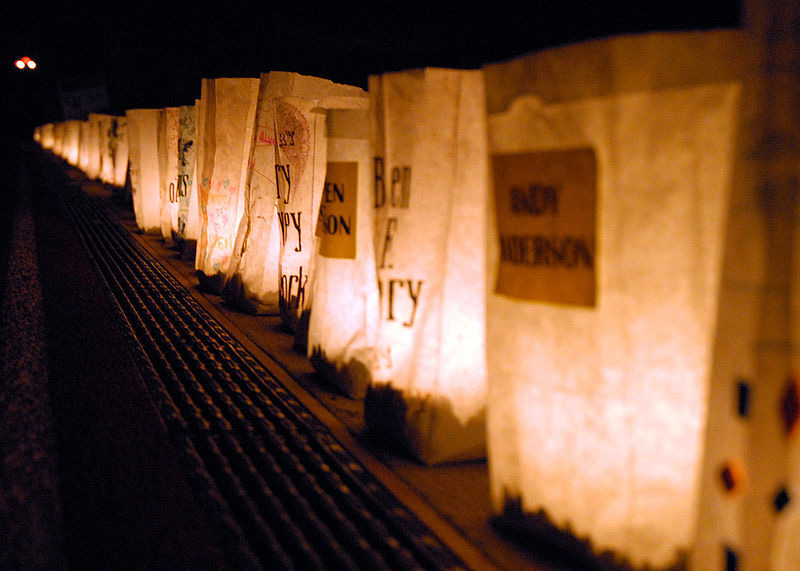
Each year luminary bags are created in memory of those who suffered from cancer. The bags line the track of the field house each year at the annual event.

Kerong Kelly
Writer

The massive 12-hour event, Relay for Life, is to be held in the field house on April 28. The goal is to raise awareness for cancer research and to support the survivors of the disease.

“We’re really excited for Relay to get things going and we really hope to get a lot of people involved and raise awareness for cancer,” Mackenzie Yaw ’15 said.

The Relay for Life planning committee is working on a number of engaging activities; such as concerts by University a cappella groups, volleyball teams and games and the attendance of vendors such as Starbucks and Dominoes to cater during the event. During the event, there will also be a survivorship ceremony, where survivors and speakers will present their experiences and hopes for the future in cancer research and support.

“It’s a really good way of involving the campus community through service,” Janie Whelan ’16 said.

The planning committee, comprised of about 70 members, has started to meet on a regular basis to discuss possible themes and activities in order to increase attendance. They would also like to involve the sororities and fraternities more so than last year.

“This will be my seventh year participating in this event and I am so excited to see what Bucknell is planning,” Liz Baldwin ’16 said.

Categories
Opinion

Obama’s proficiency in foreign policy restores confidence in voters

Elaine Lac
Staff Writer

After the three presidential debates, students are only left with waiting for Election Day on Nov. 6. Are you for the big business-minded, conservative candidate, Mitt Romney, or the middle class-supporting, liberal candidate, Barack Obama? Obama’s first two lackluster deliveries during the debates struck a large amount of doubt in liberals and the undecided majority. However, in the last debate, Obama displayed his expertise in foreign policy, thus restoring confidence in his abilities. Ultimately, Obama is the better candidate suited for the current state of America.

Throughout the election, Obama has consistently stated that his economic policy will focus on job growth. The idea is to improve America’s overall economy through small scale job creation to improve America’s deficit. The focus is on clean energy, education and infrastructure. From an environmental standpoint, clean energy is a smarter alternative to trying to maximize use of US coal and oil that Romney believes in. Romney’s decision to turn away from foreign dependence on fossil fuels is correct, but using all of our coal and oil isn’t sustainable. The conservation of coal and oil can happen; however, there is an expiration date on that use. Investment in clean and alternative energy is needed before we run out of coal and oil.

Educational improvement is another area America needs to focus on. Our educational practices are outdated and obviously inadequate. We are continually moving down in our educational quality. Romney claims that when he was governor of Massachusetts, his state was a leader in educational performance. These practices were instituted by a governor before him, leaving little credibility for Romney.

Promoting improvements in infrastructure is important in creating jobs. The idea is to help the middle class to lower class make money and produce a turning economy. Romney, on the other hand, promotes helping the upper-middle to upper class by promoting business growth. He believes that this can be fueled by extending the Bush tax cuts and cutting government spending and bureaucracy. The Bush tax cuts were only to be implemented for a small period of time to begin with. They were initiated after Sept. 11 as a way to stimulate the shaken spending population. However, these cuts have been extended for far too long and ultimately are unneeded. Next, Romney believes that by cutting vital government agencies such as Federal Emergency Management Agency (FEMA), he can stimulate the economy. This agency has proved vital, especially during Hurricane Sandy. Businesses can survive the taxes, the same way Romney can.

Romney’s consistency in policies also comes into question. It’s difficult to trust a presidential candidate who flip-flops as much as he does. One could attribute this to his lack of expertise. He was quoted on believing that Russia, and not the Middle East, is the most dangerous threat to the United States. He then flip-flopped again during the last debate by saying that he meant that the Middle East was the United State’s greatest threat. He has changed his stance many times in talking about the economy, health care and foreign policy. He has also been recorded disparagingly regarding lower class America, and saying they are not his priority. The president is supposed to represent the best interest of America, and disregarding them isn’t going to win him many points.

Obama has stayed consistent in his plans. He has been our president for four years, and he has made America a little better since coming into office. Economic growth has increased slightly, and in the face of adverse obstacles, he is still trying. America has to focus on progressive socialized ideas which many countries such as Sweden and France use. They have the best education, healthcare and happiness rating because the government takes care of them. The era of capitalistic control died after the Industrial Revolution spurred innovation. Care for the majority of America comes first, and Obama will deliver that.

Categories
Opinion

Living with friends often spoils relationships

Mary Morris and Gillian Feehan

Contributing Writers

Trying to find a good roommate is like taking a shot without a chaser. Some people can do it, and some people cannot. Then there are the many unfortunates who think they can, only to find out later when their head is hanging over the porcelain throne of regret that they were so very wrong.

The relationship between roommates is meant to be one of mutual respect. One would think this might mean doing your best to keep from waking the other up or giving each other some privacy when in a bad mood, but some roommates just don’t see things from your perspective. You try your best to be quiet when she’s napping, but she invites some friends over when you’ve pulled an all-nighter cramming for an exam.

After having your roommate selected for you your first year, many students assume that living with friends will be a more pleasant experience. But in some situations, this dream come true can turn into a nightmare before closing your eyes on the first night. Rooming with your friend prevents honest communication about habits and living styles that become problematic to the relationship. You may fear that confronting these issues will strain, and maybe even ruin, your relationship. Is telling her she’s a slob in the hopes of her cleaning up really worth the attitude you’ll be getting for the next few days?

So you try to subtly get your point across (hints about being woken up yet again this morning or writing funny notes about the dirty dishes in the sink), but your pleasantly oblivious roommate does not get the hint. After months of little annoyances, you are about to completely lose it. What do you do now?

First, take some time for yourself–go for a run, buy yourself a coffee or go to the Freez. Treat yourself like royalty! It’s hard to be rational when pushed to the brink of insanity. Once your jets have cooled, calmly approach your roommate, sit down and talk it out. Mention your problems without becoming too accusatory, listen to each other, think of some solutions and come to a compromise. You will be thankful that you took the time to sort your issues out.

There may be no relationship more demanding and fragile than the one between college roommates. Despite believing that everyone has the same experiences and background as you, it is important to keep in mind that no matter how good of friends you are, living with someone reveals all the little quirks and peculiarities that have developed over 18 plus years that your grooming cannot override. There will be rough times ahead for many future roomies, and when those times come, remember: compromise is always better than a screaming match.