Categories
Arts & Life Featured

A journey around Israel


Ben Kaufman | The Bucknellian

Ben Kaufman
Presentation Director

I went to Israel this summer for the first time on a Birthright trip through a program called Mayanot. It was truly a wonderful experience to get to see everything that I have learned about Israel come to life.

I signed up with a friend from my high school, and was lucky enough to be on the same trip with my fraternity brother, Dan Gelbard ’13. It was very refreshing to have a familiar face on the trip, and we ultimately represented our fraternity and the University. There were 40 people on our trip, including people from New York, Georgia, California, London and many other places across the globe. Our trip leader was a Harvard student and we also had three Israeli leaders, all of whom were instrumental in giving us all the knowledge and help we would need during our journey.

The teaching component of our trip started the minute we arrived at the airport. The leaders gave us basic information about Israel and what to expect for the next few days. Twelve hours later, we arrived in Israel and began the journey of a lifetime. The leaders emphasized the importance of learning about our ancestors, as well as traditions of the modern Israeli people, while on the trip. I kept this in the back of my mind as I began my journey through Israel. We were lucky enough to see great sites, including Ein Gedi, a waterfall in an oasis in the middle of the desert.

Two particular events of the trip stand out to me. The first was meeting a man named Avraham in a small town called Tzfat, which is known for its spiritual nature. A lot of the people there practice Kabbalah, work and live there. Avraham, originally from Detroit, moved to Tzfat in his 20s after he started reading and learning about Kabbalah. The study of Kabbalah inspired him to drop everything he had in America and come to Israel to further his studies. Now, he makes paintings with verses of the Torah imprinted on it, as well as images expressing his own interpretation of a person’s name. I have never met someone who was so happy and content with life. He was very relaxed and satisfied with where his life had brought him, and he taught me to be happy with what I have in life and who I am.

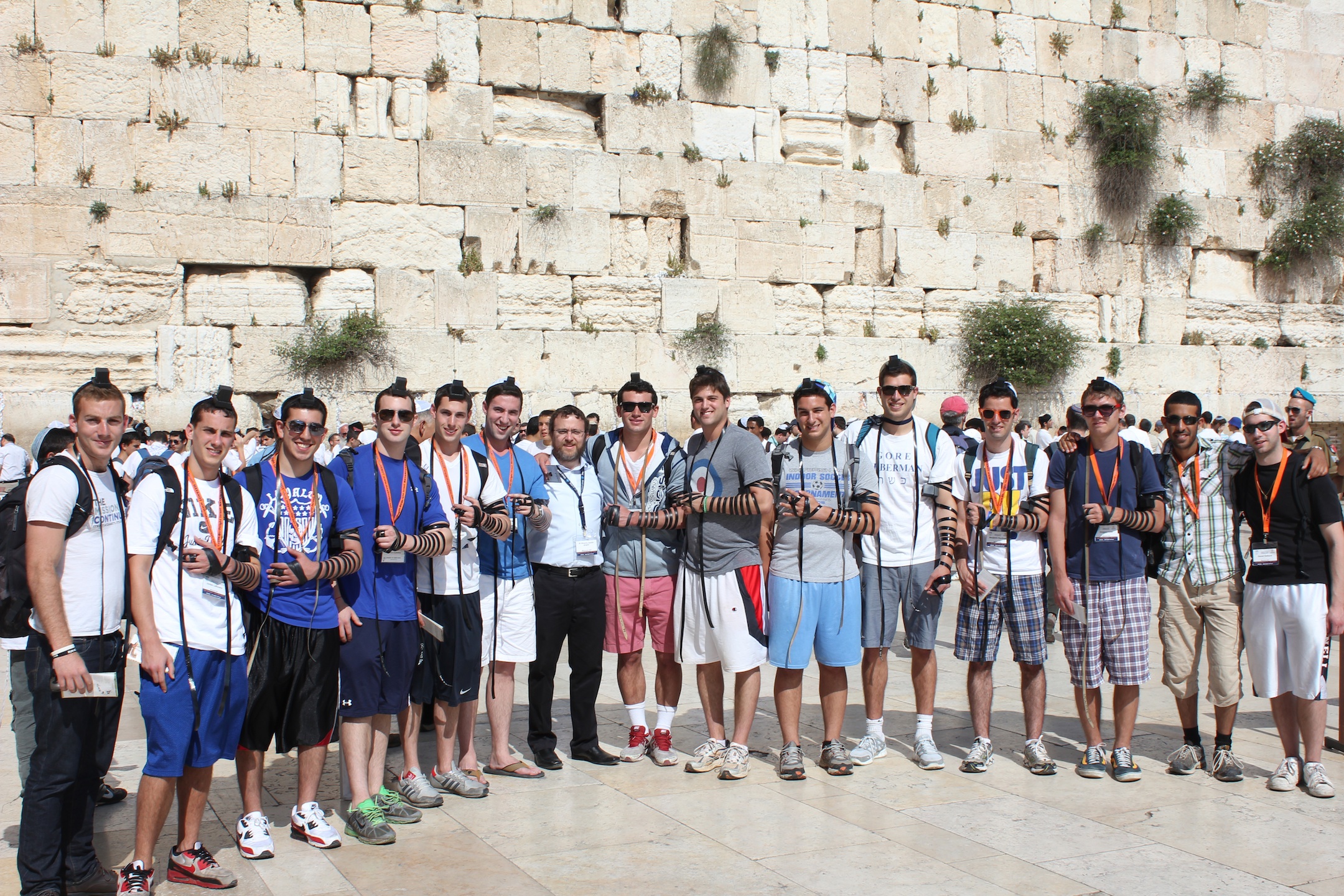
The most meaningful part of my trip was when we stayed in Jerusalem for Shabbat. We were lucky enough to go the Western Wall on Friday night and experience Shabbat with the rest of Israel. I had never felt such a strong connection to my Jewish culture than I did on that day; I had never seen so many people brought together for one common reason. Although it may seem, from the outside, that a visit to the Western Wall is a quiet, individualized moment, there is actually a sense of inescapable community when you are there. Prayers are done both within yourself and with everyone around you. People are singing, dancing and praying all around, and there is always someone to put their arms around you and invite you to join them in their time of prayer. It was at this time that I really grasped the importance of the Birthright trip.

If I hadn’t gone on this trip, I never would have understood the emotional tie associated with being Jewish. Before this trip, Judaism was never a personal connection, but rather a label or something I would bring up to a friend in passing. This trip made me realize that there is a whole group of Jewish people that have overcome obstacles and dangers, creating the strong group of people we are today. Going to Israel gave me a greater appreciation for the Jewish religion. For thousands of years, people have tried to take Israel from the Jews, and every time they have failed. It is important to understand the significance of Israel, and that it is the one place that every Jewish person has in common as a point of righteousness.

Categories
Arts & Life Columns Cooking Corner

Cooking Corner: Tuna Mac & Cheese

Katie Mancino | The Bucknellian

Katie Mancino
Writer

15-Minute Meal: Tuna Mac & Cheese
309 calories, 5g fat,  46 carbs, 23g protein
Makes 4 servings

I made this classic in the Swartz kitchen for a few friends recently. We’re all short on time so it was great to be able to sit down together with a delicious dinner that was so easy to make. It’s a dish I love because it’s fast, easy and is completely made from things I always have around–Laughing Cow cheeses and canned tuna are always in my mini fridge! The cheese wedges aren’t just to save calories (although at 35 calories each they definitely do), they’re soft and creamy, making the sauce creamier and richer too.

Ingredients

  • 1 Tbsp minced garlic
  • 2 cans chunk white tuna
  • 8 oz (4 servings) Ronzoni Smart Taste Penne
  • 1 Tbsp Land O’ Lakes Light Butter
  • 1 Tbsp flour
  • 1 cup nonfat milk
  • 4 Laughing Cow Garlic & Herb cheese wedges

Directions

  1. Start pasta and make the sauce while it cooks.
  2. In a separate pan over medium heat, cook garlic and tuna for 3 minutes with 1/4 cup water. Season with salt and pepper.
  3. Remove tuna from pan. Using the same pan, melt the butter with the flour, cooking for 1 minute until it forms a thick paste (called a roux).
  4. Add milk and cheese, then stir until it all melts and becomes a thick sauce (about 5 minutes).
  5. Toss sauce, tuna and pasta together and enjoy!
Categories
Arts & Life Columns Movies Review

“Premium Rush” deemed a typical action movie with an engaging cast


Courtesy of premiumrush.com

Carolyn Williams
Writer

“Premium Rush” is director/screenwriter David Koepp’s latest, end-of-summer, adrenaline-inducing, action thriller starring New York City bike messengers as unsung heroes locked in a classic struggle of good versus evil. But really, that’s pretty much the gist.

Joseph Gordon-Levitt stars as Wilee, an Ivy League law school grad who is putting his diploma to good use by delivering messages up and down the city as a bike messenger. This character, though perfectly likable, has a death wish; here he is whipping along lanes of traffic all day, on a bike with no gears or brakes. He and his girlfriend, Vanessa (Dania Ramirez), and their goofy sidekick of sorts (Wole Parks) are portrayed here as enlightened anti-corporate thrill-seekers. They are called to the siren song of high speed cycling through obstacles and thinking their way around corners, all while engaging in friendly banter and/or casual lovers’ spats, until the plot intervenes.

A dirty cop named Detective Monday (Michael Shannon) has a little bit of a gambling problem, and things go from bad to worse. After taking a beating from some Asian toughs for coming up short, he receives a tip about a sure way to make up his end of the bargain by the appointed time, if he’s willing to bend the law a little bit and intercept a package on its way to Chinatown.

Enter Nima (Jamie Chung), Vanessa’s roommate, who has gotten mixed up in some kind of dirty dealings in the Asian underworld. Don’t worry, we quickly learn the reason: she’s trying to bring her son into America after working three jobs for two years while attending Columbia to raise the money. She knows Wilee’s the best messenger in the biz, so she requests him to carry this sensitive package. He’s subsequently less than pleased to find himself being chased by Monday all over New York, but the truth of Nima’s package is revealed. Naturally, once they understand that they’re fighting for the “American Dream,” Wilee’s crew springs into action, leading to a series of dizzying bike chases and narrow escapes–a culminating and predictable ending for this sort of a movie.

“Premium Rush” isn’t a bad movie by any means. It has a good cast (with the exception of Shannon reprising his role as the crazy guy from “Revolutionary Road”, except it doesn’t make as much sense here) and a good director who knows what he’s doing as far as action movies go. If you’re looking for something deep, this isn’t it. Minimal character development and a general adherence to the action-film playbook hurt “Premium Rush,” even if it does have some excellent action scenes. Between “The Dark Knight Rises”, this weekend’s “Looper” and the upcoming biopic “Lincoln,” Gordon-Levitt clearly has been very busy, and though we’ll hope the next two films are better, “Premium Rush” will do for now.

Categories
Arts & Life Columns Humor Rees' Pieces

Rees’ Pieces

Ben Rees

Writer

Column History

When published in a history book, an individual is immediately lauded for his or her accomplishments while other vices he or she may have had are pushed aside. History has extremely selective hearing and, if you don’t believe me, I encourage you to be imaginative for the next 500 words and humor me–that’s right, humor me.

Let us start early with the masterful and innovative thinker, Socrates. He examined and tested the minds of men, and his methodology for questioning the general populace made him one of the most famous philosophers to date. Yet, what if we take him out of the limelight? Socrates was an older gentleman who, while walking around in a toga (which wasn’t weird then), approached unsuspecting people and bombarded them with questions.  He would hold court with the people of Athens, and was put to death for essentially being annoying or disavowing the gods; I can’t remember which. His sentence of corrupting the Athenians sounds grandiose now, but maybe, just maybe, Socrates was simply a roving wise guy who stepped on a few too many intellectual toes.

Noah Webster, the man who compiled the first American dictionary, must have been a huge bother. How frustrating is it when friends correct your speaking in a casual setting? Can you imagine having coffee with the guy who generated today’s standardized dictionary? He must have driven people up the wall with his nonstop conquest for proper language. Besides, anyone whose life goal is to compile and define an extensive collection of words must have been seriously anal (go ahead and look that one up).

I can imagine nothing worse than living with Ludwig van Beethoven. His renown is wholly justified; he is one of the most amazing musicians to have ever lived, and his works almost always sound great. I say almost always because in the unfortunate situation that he was a roommate of yours, his deafness would probably have impeded your sleeping. If a composer cannot hear how loud he is playing, then I strongly doubt he would have heard your attempts of asking him to kindly turn the harpsichord down.

Bill Gates was too smart for Harvard. He got bored there, so decided to do what many kids do–he moved into his parents’ house. Now, as glamorous as this sounds, Gates didn’t exactly sit around watching “Full House” reruns; he and his good buddy Paul Allen created Microsoft, which is the reason Gates is worth $66 billion. But, before all this success, Gates was just one of those kids who was too cool for playing Monopoly like the rest of us. Instead, he had to form a multi-billion dollar technological monopoly and make the rest of the world feel like losers for staying in school.

Everyone knows a kid who thinks he has a great idea and drops out of school, but we all sleep well at night because we believe that he will fail. But Gates and the others I have mentioned all succeeded at a massive rate because they had talent–talent and the ability to overcome anything that stood in their way. Most of us don’t have this talent, so, unfortunately, we have to control our quirks, because I know that in my case, I can’t justify my annoying habits with $66 billion or statues of myself.

Categories
Letters to the Editor Opinion

Letter to the Editor

To the Editor:

I was saddened to hear the news of Dr. Bill Duckworth’s passing last week. Bill was a professor of music at Bucknell while I was an undergraduate and he went on to global acclaim with groundbreaking compositions. He was passionate about music, engaged with his students, inquisitive, mischievous, creative, inspiring, edgy and brought a love for contemporary music. A story that underscores his personal touch as well as his “composer’s mind”  happened the night of my senior recital. In all my years of performing, I had never experienced a memorization issue. Three-quarters of the way through a masterwork by Cesar Franck, I lost focus and froze. I was only about 14 bars into the last movement when it happened: what seemed like an eternity lasted about a second and a half, I restarted the movement and finished without issue. Afterwards, Bill sought me out right after the performance and said, “you were wonderful … but I have to know … what happened in the last movement of the Franck?” I explained and he replied, “I may be the only one in the room that noticed, but I had to know … it didn’t make sense to me that Franck would have composed it that way.” We laughed about this many years later when he took me on a personal tour of the Weis Center–he was so proud of the building and highlighted many details that put students’ needs first. Dr. Duckworth made a difference for so many of us, brought recognition and honor to the University and unique compositions to the world.

Harriet Edelman 77
Trustee P ’14

Categories
News

Service Challenge fosters engagement

Brianna Marshall
Writer

A new volunteer campaign, the Bison Service Challenge, launched this week with the goal of encouraging student contribution to the University community and beyond. Participants can register to compete in teams of up to 30 individuals under the leadership of team captains. The team that contributes the most hours per member will be the winner.

“This program was created as an effort to encourage students to give back to their local area and as a vehicle to create campus unity around a good cause,” Lynn Pierson, assistant director of community service, said.

The Bison Service Challenge is a collaborative effort of multiple campus organizations including Activities and Campus Events (ACE), Bucknell Student Government (BSG), the Interfraternity Council (IFC), the Panhellenic Council, Bucknell Outdoor Education and Leadership and the Office of Civic Engagement. With diverse and expansive leadership, coordinators hope to attract volunteers with a wide range of interests and talents that can help to expand the service experiences within the Community Service Challenge. The combined efforts of multiple organizations will help to highlight the variety of activities that the University has to offer while positively contributing to community outreach.

“It’s been awesome to see how this has come together in a short time and how leaders from different organizations have worked together to do something to bring the whole campus together and give back to the community. We’re hoping it will have a big impact,” said Nick Pistone ’13, IFC community service and philanthropy chair.

With team captain selection and pre-registration complete, it’s now time for students to join a team and get involved. Students can access Bison Service Challenge forms from the Office of Civic Engagement’s page on the University website. Additionally, sign-up information including the link for registration is being distributed via flyers throughout campus and the Message Center.

“This challenge will be a strong step in the right direction for Bucknellians as we, as student leaders, attempt to reinvigorate the higher purpose that service holds in our community. We want students to be familiar with the gift of community service,” Pat Zailckas, IFC president said.

All team volunteering contributes to reaching an overall program goal of 10,000 hours of service. Teams will have approximately two months to volunteer with the competition running from Sept.ember 29th to December 1st.  If the program goal is met, a free campus event will be held to celebrate. this accomplishment.

Categories
News

Academic work falls short of University expectations

Amanda Ayers
Managing Editor

According to a recently released ad hoc Committee report compiled in the Spring 2012 semester, a student’s academic engagement is not determined by the major that his or her class falls under but rather the level of effort put forth by the students and professor. The report highlights both strengths and weaknesses of the University and outlines 67 recommendations for individuals, offices and committees to foster academic engagement.

The report clarifies University expectations about the amount of time students spend on academic work because it falls well short of what it should be. The report also suggests that students of color have not enjoyed the same benefits of a University education as their white counterparts.

According to the study executive summary, “The overall impression is one that reinforces negative perceptions about non-white students’ academic engagement, especially African-American students. It appears that in general, non-white students are ‘engaged’ more in their first year than in their last.”

The Committee analyzed existing University data to look at academic engagement from three angles: academic engagement in the classroom, transformative educational experiences and other factors that influence academic engagement.

In the classroom, increased student engagement will rely on increasing faculty-student and student-student engagement on academic issues, improving data collection so our community can better identify the specific areas for improvement, track changes and better encourage faculty efforts at engagement.

“The report on Student Engagement represents a step in the right direction for Bucknell’s continued growth and maturation. It is not enough to merely attend class and do assigned work; one must also strive to learn outside of the classroom,” Jeff Finegan ’14 said. “The effort on the part of Bucknell, students and student organizations to increase intellectual engagement on this campus is a necessity and should be lauded.”

Transformative educational activities that were listed as capable of enriching a student’s four-year University experience include foundation seminars, residential college programs, service learning and civil engagement, study abroad, undergraduate research and student leadership and organization membership opportunities.

Finally, the report points to other factors that can influence academic engagement such as the admissions process, evaluation of faculty and health factors. An applicant should have characteristics of someone likely to be academically engaged in the future. The University should recognize faculty efforts that seek to contribute to student academic engagement and encourage rigor in the curriculum. The University should address binge drinking and its negative effects on student performance, as well as the ways in which harassment can hinder a student’s academic engagement.

According to the committee’s study, “Our analysis of the data suggested that several negative trends with respect to student academic engagement begin in the very first year, suggesting that particular attention be paid to examining how the first year experience might be altered to improve this situation.”

The findings came from the ad hoc Committee co-chaired by Dean George Shields and Professor Mike Prince. The committee is made of 14 members, composed of three students and 11 faculty and staff. The report findings were presented to the Committee on Instruction (COI), Committee on Campus and Student Life (CCSL) and the Provost’s office at the end of the 2011-2012 academic year. The report was released publicly to the campus community on behalf of Provost Mick Smyer and Associate Professor Tim Raymond, Chair of the COI.

The committee plans for the study to be ongoing.

“We have already begun that process [of improvement] in the Provost’s Council and in the Committee on Instruction,” Smyer said. “Again, thank you to Dean Shields, Professor Prince and their colleagues for their very good work. We look forward to considering their recommendations in formal and informal settings in the coming weeks.”

Categories
News

Religious speech encourages thinking together

Paige Bailey
Contributing Writer

Dr. John Fea, associate professor of American history at Messiah College, implored the audience to “avoid the politicization of history” and instead “think together” in a historical manner at a lecture on Sept. 18. Fea’s lecture was given in the Elaine Langone Center Forum to a full crowd of students, professors and Lewisburg locals. The University departments of history, religion and political science sponsored the lecture along with the Dean’s Office of the College of Arts and Sciences and the University Lectureship Committee.

The lecture title mirrored Fea’s most recent book, “Was America Founded as a Christian Nation: A Historical Introduction.” Fea’s recent book was one of the finalists in the George Washington Book Prize, one of the most prestigious literary prizes in the nation, among other awards. Fea is chair of the history department at Messiah College. Fea specializes in American history, with a special interest in how religion has manifested throughout the nation’s history.

While Fea conceded that most people come to such lectures with their minds made up about the role of religion in American politics, he challenged the attendees to think about the argument he outlined. His argument was critical of both the role of the political Left and Right in manipulating the “discipline of history” for political purposes.

Fea then gave a comprehensive overview of how the founders of the country viewed religion. The Founding Fathers did, in fact, believe Christianity was good for the republic. Yet, Fea argued that these men saw Christianity as one means to meet the ends of a society that promoted “virtue.” Virtue, for the Founding Fathers, was characterized by consistency in promoting the public good. Therefore, if people acted in line with Christian values of taking care of others, it was seen as an effective way to contribute to the public good.

Despite the Founding Fathers’ Christian values, Fea pronounced the Constitution as a “godless document.” This statement is one reason that both Democrats and Republicans are made “uncomfortable” by the argument that he puts forth in his book.

Assistant Professor of Religion Brantley Gasaway commended Fea for his criticism of both sides of the political spectrum in using religion to promote partisan agendas.

“I agree with Fea that answering the question of whether or not America was founded as a Christian nation requires not only a recognition of the complexity of the evidence, but also a commitment to not let our contemporary political biases distort our historical interpretations,” Gasaway said.

Both Christian nationalists and secularists can be guilty of manipulating the past for present political purposes. Gasaway, like Fea, teaches his students to “be wary of simplistic appeals to the religious beliefs and motivations of the founders when they are used as justification for current public policies and political positions.”

“I thought that it was interesting that Fea took on this task by focusing largely on history rather than politics. He wasn’t very polemical at all, I think he was just trying to make a historical argument and found his evidence within the Constitution,” political science major Laura Bergamini ’13 said.

Categories
News

Christy’s a cappella brings harmony


Raffi Berberian | The Bucknellian
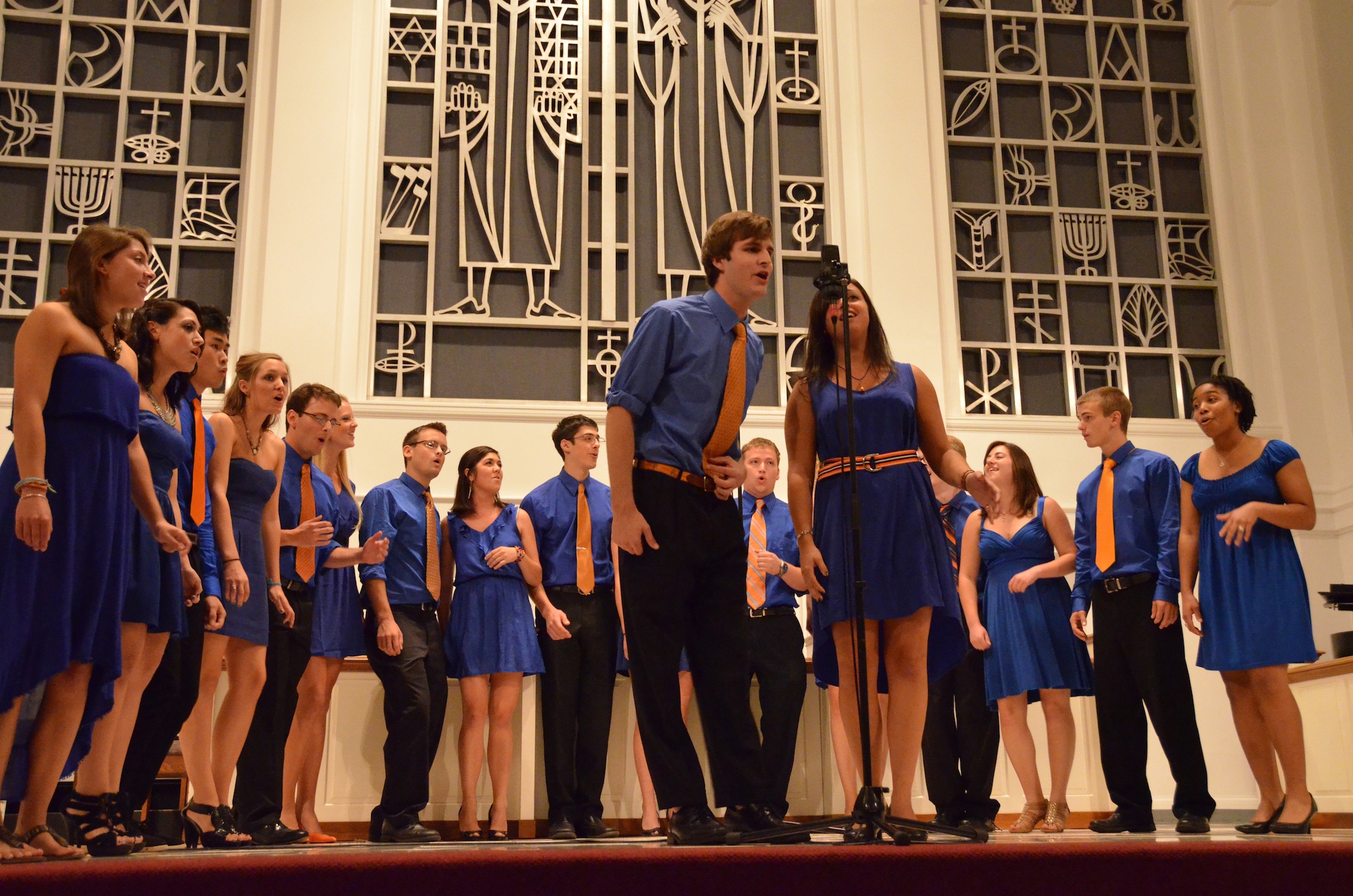
Members of one of Bucknell’s co-ed a cappella groups, Beyond Unison, perform their set at Christy’s.

Ali Napoli
Writer

The University held its annual Christy’s A Cappella concert in Rooke Chapel as a part of Parent’s Weekend on Sept. 21 and 22. The concert has been taking place for 22 years, and it began as a more casual “coffeehouse” type event. This year, the five a cappella groups on campus participated: The Offbeats, Beyond Unison, Two Past Midnight, The Silhouettes and The Bison Chips.

“We were especially looking forward to Christy’s this year. We really wanted to show our families and friends the great deal of work that we’ve put in over the past few months. Because we’re such a new group, this was the first year that we’ve done a full set and a skit at the concert, so it was really exciting for the Offbeats. It was definitely a lot of fun and we’re already looking forward to next year!” Jessica Isgro ’15, Musical Director of The Offbeats, said.

Each group preformed four to five pieces, ranging from Billy Joel’s “Only the Good Die Young” to Justin Bieber’s “Boyfriend.” Rooke Chapel was packed with family, friends, students and alumni appreciating the talent of those on stage.

“Christy’s is always a really fun event. I love being able to perform at a concert with all of the other a cappella groups, and I think it is really fun for the audience to have a concert with such variety. It was a lot of work to learn all of the music in only one short month, but I think the hard work paid off,” Beyond Unison’s Annie Schulenburg ’13 said.

Although most recognize it as a fun event, for some it was a more sentimental experience. Jenny Rosen ’13, a member of the Silhouettes, had her last Christy’s performance this year.

“I could not be more ecstatic to be sharing the stage with this amazing group of girls. The Sils love performing at Christy’s and it is a very special concert for all of us,” Rosen said.

Both nights were close to sold out, drawing a huge crowd for the performers.

Categories
News

Jeffrey Evans named Cambridge fellow

Courtesy of Bucknell.edu
Jeffrey Evans, professor of civil and environmental engineering, was recently awarded a Cambridge Fellowship for fall 2012/spring 2013.

Dr. Jeffrey Evans, a professor of civil and environmental engineering at the University, has been awarded a Fellowship at Churchill College, Cambridge University, for the fall 2012 and spring 2013 terms. He will be in residence there for six months during his sabbatical from the University.

What kind of process did you have to go through to get this fellowship?

“First, Professor Kenichi Soga of the University of Cambridge nominated me. He is a fellow in Churchill College. I then needed to secure letters of reference. Professor Soga suggested Professor Andrew Whittle, chair of civil engineering at MIT, and Professor Thomas O’Rourke, Thomas R. Briggs professor in engineering at Cornell University. Both are members of the National Academy of Engineering and both were previously Overseas Fellows at Churchill. The Fellowship Electors then considered the nomination and references letters and I was elected to an Overseas Fellowship.”

What are the terms of the fellowship? What are you required to do?

“As per my award letter, ‘It is expected Overseas Fellows will take part in the activities of the college and that they will have associations with appropriate [Cambridge] University departments.’ In this regard, I also have been invited by the Engineering Department of the University of Cambridge to join them as an official ‘academic visitor.’ Thus, there are no specific requirements for me to fulfill, but rather my participation in the enterprise of [Cambridge] University is expected. Mostly, I will be working on research and working with graduate students in engineering.

The Fellowship also provides me access to on-campus Fellows accommodations for which I would be otherwise ineligible. It also includes, free of charge, all of my meals including dining at the High Table.”

How is the British style of teaching different than the American style? Will you have to make modifications to your teaching style?

“Since I will not be in the classroom in what might be considered the normal ‘teaching’ environment, teaching at Cambridge will be similar to teaching at Bucknell. That is, I will be meeting one-on-one with students to discuss their work, guide their thinking and answer questions as appropriate.”

How do you think your teaching career at the University has prepared you for this fellowship?

“While teaching at Bucknell University, I generally have an open door policy and often meet with students one-on-one to discuss coursework as well as broader topics such as employment opportunities, research and professional issues. This will be similar to my role at the University of Cambridge.

It is worth noting that the scholar part of the teacher-scholar model at Bucknell University was an essential component to my election as an Overseas Fellow. I’ve been fortunate working with good students and faculty colleagues as well as in securing NSF grants during my time at Bucknell University. Without this scholarly productivity, an appointment at a university such as Cambridge would be highly unlikely.”

What do you think the biggest adjustment will be in terms of living in England?

“Having lived in England during two previous sabbaticals, I’m rather familiar with most aspects of life in Britain. Of course, everything is more expensive here so that is always a consideration. Also, I do not plan to have a car, so there will be considerably more walking and biking than in Lewisburg. I certainly won’t miss the many committee meetings and administrative duties I had at Bucknell, but I’m sure I’ll quickly adjust to their absences.”

What are you most excited about in regards to being at Cambridge?

“The city of Cambridge is one of the most beautiful cities in England and the walk from Churchill College to the engineering building is delightful. The University [of Cambridge] is consistently rated one of the top five in the world and the opportunity to work in such an environment is exciting. After work, the cultural opportunities for concerts, plays, music and the like are seemingly never-ending. As Bucknell’s Professor Howard Smith (originally from Wales) stated to me this summer, ‘Cambridge; it doesn’t get any better that that.'”

Do you think this experience will change how you approach engineering at the University?

“I certainly believe it will bring fresh ideas and approaches to the classroom and to the research I carry out with our students. There is a lot happening in civil engineering in the UK and Europe, and undoubtedly I’ll be sharing this with our students when I return.”